Experience Life's Great Adventures!
After 53 years of guiding, I’ve declared a sabbatical. No more guiding for now, as I’m writing a memoir.
Sabbatical implies a meaningful hiatus from life's work, with the possibility of returning to that work in the future. In the meantime, I’ll use my time wisely, learning new skills and testing the limits of subjects and predicates.
Stay tuned here for updates and sneak previews, and follow me on the Facebook and Instagram:
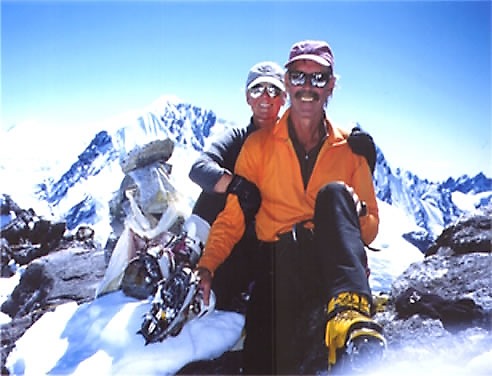
Skip's résumé speaks for itself:
The first to guide Mt Everest.
First to guide the Seven Summits, the highest peak on each continent.
420th person to summit Everest.
Guided adventures in 64 countries, and traveled to over a 100.
A hundred Himalayan treks and climbs led, including three 8000-meter climbs.
Skied to the North Pole.
Six ascents of Gunnbjørnsfjeld, the highest peak in the Arctic, including the first ascent of the now "Normal Route."
Eleven expeditions to Antarctica, including 8 ascents of Mt. Vinson, the highest peak.
Sailed a 67-foot sloop across the Drake Passage from Argentina to ski the Antarctic Peninsula, then sailed back.
Dozens of safaris guided in 24 African countries.
Thirty-three guided ascents of Kilimanjaro.
Twenty major Andean peaks guided.
Thirty-eight guided descents of the Colorado River through the Grand Canyon.
Guided first descents of a dozen rivers worldwide, including the Zambezi, the Yangtze, the Yarkand, the Indus, and the Bio-Bio.
Six sailing trips through the Galapagos Islands.

Skip Horner had the only successful run through Hung Men Kow, the biggest rapid of his life, on the Yangtze River Expedition in 1989. Other boats either portaged or flipped.
Ten Alaskan adventures, including climbs and river-runs.
Over 2,500 nights spent in tents in wild places around the world.
Over 15,000 miles of whitewater rivers run on five continents.
Over a thousand summits reached.
Join Skip on The Trail Less Traveled as he describes leading his clients up the highest peaks in the Arctic and the Antarctic, and through some of the hairiest whitewater on the planet. Complex decisions and periodic mistakes underscore the challenges, as travelers worldwide trusted Skip to motivate them through the fulfillment of their utmost adventure dreams.
Past Adventures
Colombia, January 20 - February 4, 2024
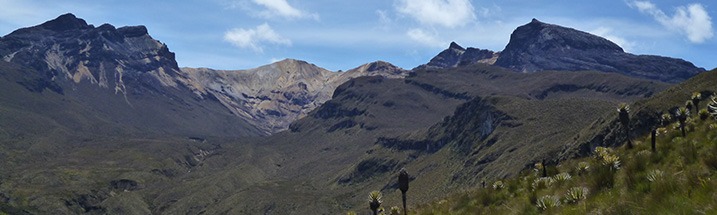
Colombia's natural beauty, its flora and fauna, mountains, jungles and seashores, gracious people, and excellent cuisine combine to make this one of the most attractive travel destinations. We toured Bogota's museums and mountaintop vistas, trekked through the remote Paramo landscape, & climbed two Andean mountains offering views of active volcanoes nearby. We explored the Guaviare, a little-known Amazonian region, famous for newly discovered pre-Colombian artwork. My old friend Rodrigo Arias, a famous Colombian mountain guide with a deep love and understanding of his country, accompanied us throughout our journey.
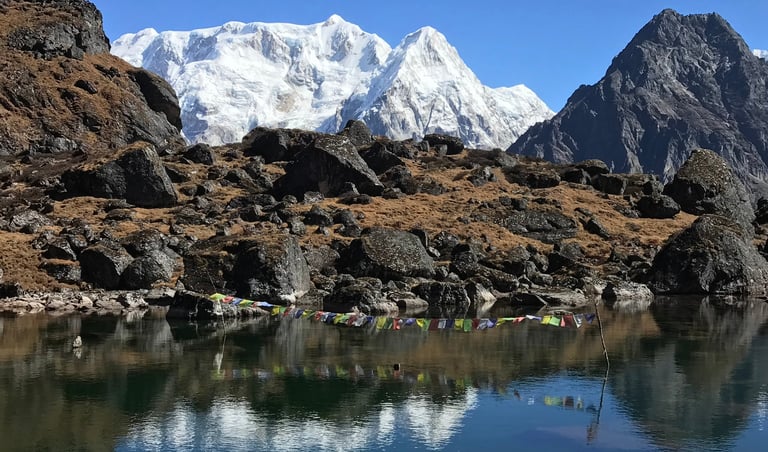
Jugal Himal, Nepal, April 3-20, 2024
We trekked for 15 days through the Jugal Himal, a destination visible in the distance above Kathmandu, but worlds away in atmosphere. Giant 7000-meter peaks such as Dorje Lakpa and Chobo Bhamare that challenge alpinists offer the stunning backdrop to our every day on the trail. Unlike other mountain areas of Nepal that see hundreds of trekkers, the Jugal is little known to the outside world. Only a few pilgrims visiting its holy lakes make their way into this little-known region.
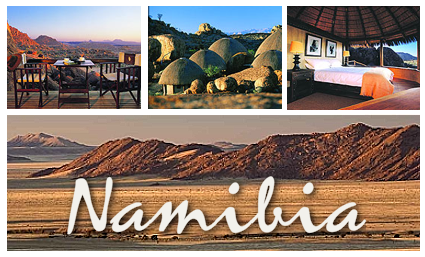
Into Namibia: The Unknown Heart of Southern Africa, Oct. 22 - Nov. 1, 2024
We explored the awesome landscapes of giant red sand dunes, immense sparkling-red granite cliffs sprinkled with exotic flora and fauna, and a tempestuous coastline hosting unlikely populations of oryx, giraffe, and desert-adapted elephants. Tribal cultures little changed by modern times still wander these wild places. We immersed ourselves in the best of this unexpectedly inviting country, lodging in remote camps at Sossusvlei, Skeleton Coast, Etosha, and surprising Damaraland, traveling on foot, 4x4, and chartered aircraft.
Ecuador: Amazon & the Galapagos Islands, Nov 25 – Dec. 9, 2024
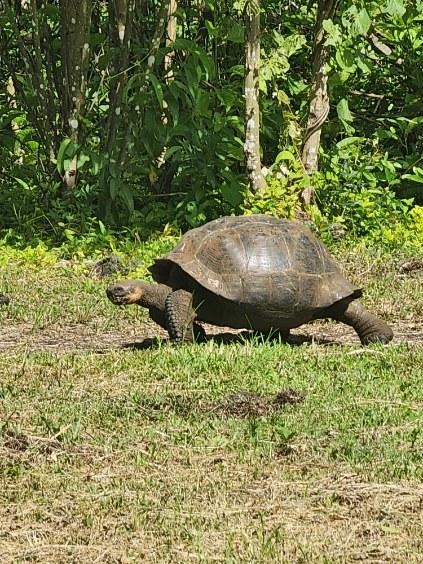
We ventured deep into the Amazon Basin, to the Napo Wildlife Center in the heart of Yasuni Biosphere Reserve, the largest tract of tropical rainforest in Ecuador. Our group hiked and paddled far into the jungle for up-close encounters with the unique flora and fauna and spent our nights in private thatch and stucco bungalows, enjoying chef-prepared meals. Then it was off to a 7-day Galapagos cruise on our 72' luxury sailing catamaran, the Nemo II, hiking, paddling and snorkeling this extraordinary reserve, accompanied by a local guide, an expert on this astounding archipelago.
Private Outfitting: Exclusive, One-of-a-Kind Trips
Each year we arranged and outfitted many private trips for individuals, families, and groups to a wide variety of destinations and adventures worldwide. Some of these trips we personally guided, for others we set the itinerary and made all the arrangements with our local in-country agents who excel in guidance and support.
Our contacts are extensive and far-ranging, always the best available in their country. We have worked closely with each of them for years. Many are our close friends!
Get out and stay out!
Seasoned travelers know any time is a great time to see the world, and over the years we’ve provided unprecedented access to its remote places. We understand the existential threat we face in certain areas, and we have never taken this lightly. But neither have we been willing to stay home out of fear. Submitting to fear only leads to more fear and a curtailment of our freedom. We must always travel smart. But we must always travel.
We remain unswerving in our resolve to seek out the exotic, the beautiful & the rare in our world. Our unconventional trips have taken travelers up great peaks, down challenging rivers, on unique wildlife safaris, and into remote cultures. We designed one-of-a-kind trips to out-of-the-way places for small groups of like-minded people. It's a unique style available nowhere else, and it's based on our 50+ years of traveling the world adventurously to all 7 continents.
We also designed private trips and safaris, even honeymoons! Some came to us with a specific trip in mind. For others we suggested destinations, then crafted their private holidays. We have friends and contacts all over the world, and we’ve organized private trips to such places as Kenya, Tanzania, Botswana, Mali, Greenland, Australia, Mongolia, Nepal, the Alps, Colombia, and Patagonia. Call us if you want help with some great ideas!
Get out and stay out!
Skip & Elizabeth Horner